


Rapide, Direct, Hautement décarboné
L’alternative transatlantique entre le fret aérien et le maritime
Europe – USA
ligne 100% vÉlique
route DIRECT
sans transbordement
ni engorgement des hubs portuaires.
capacité de la flotte : 30 000 palettes / an, dans chaque sens

<15 JOURS
Objectif de port-à-port

1 dÉpart / semaine
Fréquence visée à plein déploiement

fiabilité
Plus de contrôle. Plus de prédictabilité

sécurité élevée
Service client dédié de bout en bout

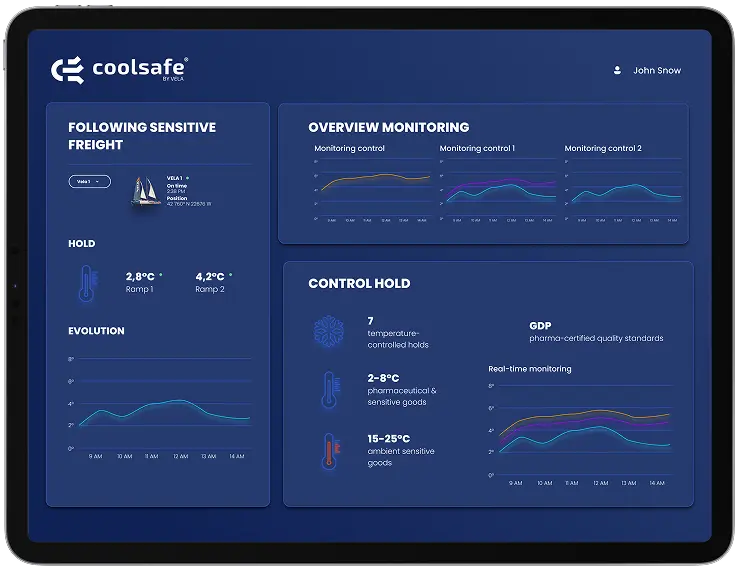
7 CALES à températures dirigées
2°-8°C / 15°-25°C

600 paletTEs EURO/semaine
Fréquence visée à plein déploiement

impact
climatique
jusqu’à moins 95% d’émissions de propulsion

impact
Social
Pavillon français : des normes sociales élevées pour les marins

impact
sur la
biodiversité
0 eaux de ballast. Aide à protéger l’écosystème maritime.
Construit pour la performance.
conçu pour l’impact


END-TO-END TRANSATLANTIC FREIGHT, POWERED BY VELA AND DHL GLOBAL FORWARDING
One integrated offer.
VELA and DHL Global Forwarding combine their expertise to offer a seamless, door-to-door solution from pickup to final destination. A premium service for shippers who demand performance, reliability and a lower carbon footprint.

enlèvement
Depuis votre entrepôt

formalités douanières
EXport
Dédouanement & Manutention

PRE-
acheminement
Jusqu’au port

TRANSPORT
maritime
avec le trimaran VELA

formalités douanières import
Dédouanement & Manutention

POST-
acheminement
Jusqu’à la destination finale
THE VELA + DHL ADVANTAGE

LOWER-CARBON OFFER
Together, VELA + DHL enable a lower-emission shipping solution on the transatlantic market.

SEAMLESS, FAST & RELIABLE
An integrated door-to-door offer designed to maximize speed, reliability and ease of execution.

PREMIUM SECURITY
Controlled chain of custody and high standards of protection.

DIRECT
ROUTE
No transshipment. No hub congestion. More control.

TAILORED SOLUTIONS
For high-value, sensitive and time-critical goods.
Expansion future de VELA
le déploiement du fret vélique à grande échelle
Notre premier navire trace la route. Grâce à une flotte de cinq navires sur l’Atlantique, VELA ambitionne d’offrir des départs hebdomadaires, une régularité de service absolue et une capacité annuelle allant jusqu’à 48 000 tonnes entre l’Europe et les États-Unis.
Et ce n’est qu’un début : VELA bâtit un modèle opérationnel duplicable sur les routes stratégiques mondiales, main dans la main avec des partenaires prêts à propulser le fret vélique de haute performance sur leurs marchés.

Transport durable sous chaîne du froid
pour les marchandises sensibles et à forte valeur ajoutée
Une solution de transport brevetée et hautement décarbonée, conçue pour l’industrie pharmaceutique et les produits thermosensibles.
Certaines innovations ne se voient pas au premier coup d’œil. CoolSafe en fait partie.
Au cœur des navires VELA se cache un système de réfrigération de nouvelle génération. Entièrement alimenté par l’énergie renouvelable générée à bord, il définit un nouveau standard pour le transport durable de marchandises sensibles.
Plages de températures maîtrisées : 2°C – 8°C et 15°C – 25°C
Cales et procédures (SOP) certifiées GDP Pharma (Bonnes Pratiques de Distribution)
Une performance pensée pour les exigences de l’industrie pharmaceutique
Développé en partenariat avec T.R. Équipements, spécialiste du froid industriel, CoolSafe équipe les sept cales sous température contrôlée du trimaran VELA.
Chaque cale est conçue pour garantir une totale conformité avec les exigences des BPD (Bonnes Pratiques de Distribution), s’appuyant sur des systèmes de surveillance de la température en temps réel et de contrôle des excursions :
- 2 cales réfrigérées (2°C – 8°C) pour les produits pharmaceutiques les plus sensibles et les marchandises à température critique.
- 5 cales en température ambiante contrôlée (15°C – 25°C) pour les autres marchandises essentielles.
La décarbonation sans compromis
Alimenté par un système d’énergie renouvelable autonome, CoolSafe permet de réduire jusqu’à 99 % les émissions de carbone par rapport au transport international traditionnel.
Avec CoolSafe par VELA, les chargeurs de l’industrie pharmaceutique n’ont plus à choisir entre durabilité et fiabilité de service.
Focus : Système d’énergie renouvelable autonome
L’innovation CoolSafe repose sur une intégration énergétique inédite, qui permet de recharger nos batteries grâce à l’énergie produite à bord, garantissant ainsi la totale autonomie de la chaîne du froid.
- Production solaire de nouvelle génération
Optimisation de la production électrique grâce à 250 m² de panneaux photovoltaïques de dernière génération :
- Une efficacité maximale grâce à la surface disponible en mer
- Des technologies photovoltaïques marines de haute performance
- Une production continue, parfaitement adaptée aux besoins de réfrigération
2. Des hydrogénérateurs révolutionnaires pour les cargos à voile L’électricité nécessaire au maintien de la chaîne du froid est complétée par des hydrogénérateurs aux dimensions inédites pour un voilier :
- Une exploitation optimale de l’énergie cinétique marine
- Un rendement énergétique constant en navigation
- Une innovation technique parfaitement adaptée au profil du trimaran VELA
3. Une sécurité énergétique diversifiée
Un système de stockage par batteries haute capacité à bord, associé à un groupe électrogène compatible biocarburant :
- Stockage d’énergie pour la navigation nocturne et les conditions défavorables
- Groupe électrogène de secours alimenté par des biocarburants durables
- Sécurité absolue de la chaîne du froid 24h/24 et 7j/7

Adapté au transport pharmaceutique
Conçu pour les marchandises sensibles, avec des cales sous température contrôlée entre 2° et 8 °C et entre 15° et 25 °C.

Décarboné
Un transport maritime propulsé par le vent et combiné aux énergies renouvelables à bord.
“Le fret sensible ne devrait plus être un arbitrage entre performance opérationnelle et durabilité.”
Containers have been ruling goods transportation over the last 50 years.This choice was made for economic reasons but with a high environmental impact, just like air freight.
- #IMPACT: the weight of the containers (3 tons each) accounts for more than 20% of what is being transported on a conventional container ship vs. 2% for equivalent pallets (25kg each). Using pallets enables the transport of goods alone, without useless extra weight. Each pallet represents a reduction of 200kg in weight and the corresponding CO2 emissions.
- #STANDARD: we transport your goods in the same way they were initially prepared at your warehouse in French or US formats.
- #AGILE: You only pay for the goods we transport for you. There are no consolidation fees to compensate empty container management.
- #OPTIMISED: using pallets enables a vessel’s hold to be fully optimised and thus transport more goods than with containers.
We use very advanced weather routing techniques to define the optimal trajectory for each crossing. This allows us to avoid windless areas and areas where the wind is too strong.
These innovative cargo ships coupled with this routing allow us to be faster than conventional container ships (unloading included) on the Caen-New Haven route
It depends on the types of products and the palletizing plan.
We are up to 5 times cheaper than air travel.
For example, for a bottle of mid-range spirits, the additional cost represents a few tens of cents, compared to conventional sea freight.
At VELA, we practice “fair” prices for sustainable and socially responsible transport.