


Designed for performance
the trimaran
advantage
A cargo vessel architecture built to combine speed, stability, service reliability and radically lower impact.
Vela Trimaran
A vessel built for modern freight
Advanced technology from offshore racing delivers unmatched efficiency, reliability and performance at sea.
DIMENSIONS
220 ft Length
82 ft Beam
AIR DRAFT
200 ft
Designed to pass under New York’s bridges
AVERAGE SPEED
14 knots
On the transatlantic route
CARGO CAPACITY
600 pallets
of goods / 410 metric tons
SAIL AREA
6,705 sq ft
of sails
RENEWABLE ENERGY
2,583 sq ft
of solar panels
2
hydro-generator


Designed by the Best: VPLP and MerConcept. Our trimaran is the first of its kind, crafted by world-leading experts VPLP and MerConcept. Stable, fast and environmentally responsible, it operates without ballast tanks – eliminating the environmental risks of invasive species. Thanks to its advanced sails and cutting-edge technology, the Vela trimaran sets a new benchmark for energy efficiency, harnessing wind power without compromising on stability or speed.
Our Technical Partners



Why
a trimaran?
The Vela trimaran is far more than a traditional sailing vessel. Its unique design combines speed, stability, and safety while minimizing environmental impact.
from offshore racing to
maritime freight
Unlike monohulls, the Vela trimaran sails flat, offering natural stability and minimal heel. This ensures greater comfort and safety for both crew and cargo – especially for sensitive goods – by avoiding the 10–20 degree heel typical of monohulls.
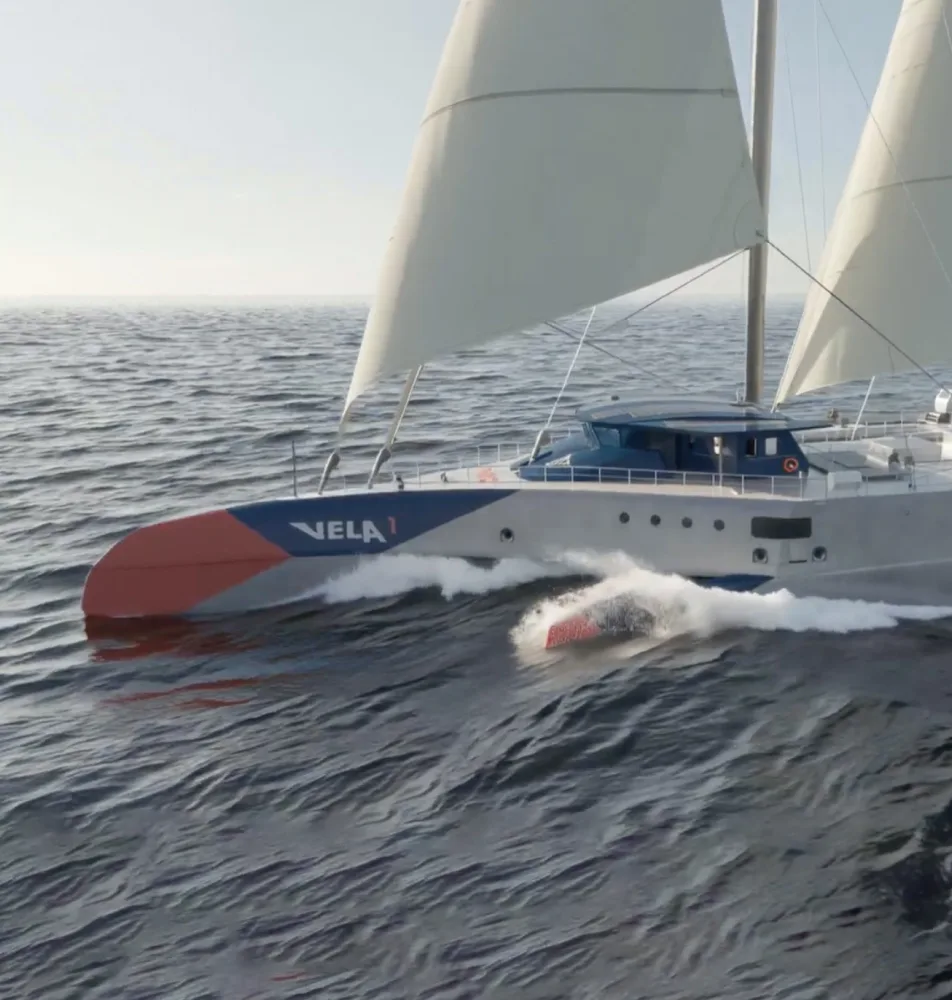
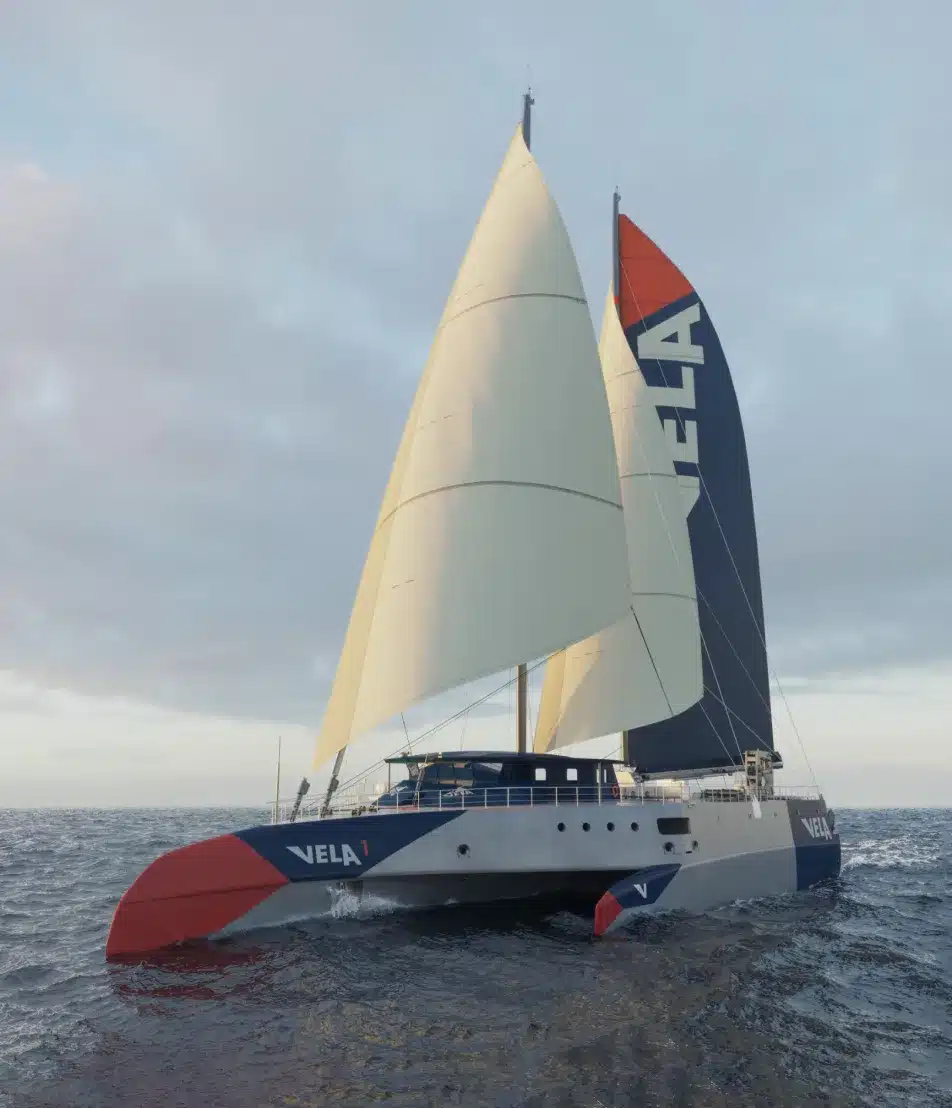
Made for sensitive cargo
STABILITY & SAFETY
Lower heel angles and a wide, stable plateform reduce motion and loads at sea, protecting sensitive cargo and improving crew comfort. This leads to safer operations and more predictable schedules in demanding conditions.

speed

lower heel
angles

stable cargo platform
smoother
operations

more predictable voyages
environmental impact
A vessel designed to minimize its footprint

wind-powered propulsion
Up to 95% impact reduction on propulsion compared with

0 ballast water
A trimaran architecture designed without balast water, reducing biodversity-related risk

onboard renewable
Solar generation complemented by two hydro-generators beneath the hall
Meeting the Highest Merchant Marine Requirements
Vessels and Social Standards

Safety & Security Onboard
Our cargo trimarans are built to the strictest merchant marine standards. They comply with all major international IMO conventions (SOLAS, COLREG, MARPOL, STCW, ISM, ISPS), ensuring a high level of safety for crew, cargo, and navigation.
Social Responsibility for Seafarers
As French-flagged vessels, we fully adhere to International Labour Organization requirements and national regulations, guaranteeing fair, stable and respectful working conditions for our crew.
High-Precision Weather Routing
Navigation is optimized in real time through advanced weather routing by our teams, in partnership with MerConcept-renowned experts in offshore racing. This translation maintains the technical rigor and professional tone expected by U.S. maritime and logistics decision-makers, emphasizing both operational excellence and social responsibility.
COFOUNDER &
CHIEF SAILOR
Offshore racing world champion
As Vela’s Co-Founder, François Gabart uses his extensive expertise in elite offshore racing and maritime technology to drive sustainable ocean transport.

“Every day counts”
François Gabart
Containers have been ruling goods transportation over the last 50 years.This choice was made for economic reasons but with a high environmental impact, just like air freight.
- #IMPACT: the weight of the containers (3 tons each) accounts for more than 20% of what is being transported on a conventional container ship vs. 2% for equivalent pallets (25kg each). Using pallets enables the transport of goods alone, without useless extra weight. Each pallet represents a reduction of 200kg in weight and the corresponding CO2 emissions.
- #STANDARD: we transport your goods in the same way they were initially prepared at your warehouse in French or US formats.
- #AGILE: You only pay for the goods we transport for you. There are no consolidation fees to compensate empty container management.
- #OPTIMISED: using pallets enables a vessel’s hold to be fully optimised and thus transport more goods than with containers.
We use very advanced weather routing techniques to define the optimal trajectory for each crossing. This allows us to avoid windless areas and areas where the wind is too strong.
These innovative cargo ships coupled with this routing allow us to be faster than conventional container ships (unloading included) on the Caen-New Haven route
It depends on the types of products and the palletizing plan.
We are up to 5 times cheaper than air travel.
For example, for a bottle of mid-range spirits, the additional cost represents a few tens of cents, compared to conventional sea freight.
At VELA, we practice “fair” prices for sustainable and socially responsible transport.